End of Year Report
January 1, 2022 – December 31, 2022
The Massachusetts Immigrant Collaborative is extremely grateful to our supporters. Funding in 2022 enabled the Collaborative and its 15 partners to provide food and emergency cash assistance to 10,749 of Massachusetts’ most vulnerable residents. Though their struggle is not over, essential support enabled them to remain in their homes and provide meals for their families.
In 2022, the Collaborative provided direct cash assistance ranging from $300 to $750 to 465 households. Nearly all were struggling to pay rent and/or buy groceries (87%) and a number of families had medical needs. “Sofia” shares her story:
“Sofia” had worked full-time in the hotel industry but lost her job during the pandemic. Homeless, she and her children stayed with family and friends for two years. In August, Sofia found an apartment and a job and is now on the path to rebuilding her life. Emergency funding helped her secure her apartment and live with dignity for the first time in 2 years.
Funding also enabled Collaborative partners to provide culturally appropriate food and groceries to community members struggling with food insecurity. Combined, they distributed food and grocery gift cards to 3,766 households. The impact of this is significant. Studies show that food insecurity is associated with lack of nutrition, depression, and a range of health problems including diabetes and high blood pressure. (Health Affairs vol. 34, No. 11: Food & Health).
Since April 2020, MIC and its partners have:
- Provided emergency cash and food assistance to 120,000 immigrants and refugees ● Distributed 4,000,000 pounds of food to families experiencing food insecurity ● Offered trusted access to COVID vaccines to 5,000 people
- Trained 300 youth in leadership and workforce skills
In September 2021, MIC partners determined that immigration legal services are a priority for our community. We recently launched our Legal Services Program providing expert immigration legal advice and representation, and educating community members about the immigration process, and what their options are so they can decide the best way toward building a stable life.
In March, we identified three organizations best suited to provide legal assistance. MIC partners Rian Immigrant Center and Agencia ALPHA; and Mabel Center for Immigrant Justice serve as “legal partners”. Collectively, the three organizations have over forty-five years of experience providing legal services to immigrants; each with a different area of expertise including asylum, legal support for immigrant youth, family-based and citizenship cases and more. Community members are referred by the 15 MIC partners or by other sources connected to the Collaborative. Legal partners offer free, confidential consultation; and with the client assess the best way forward, including full representation or support filing forms in urgent circumstances.
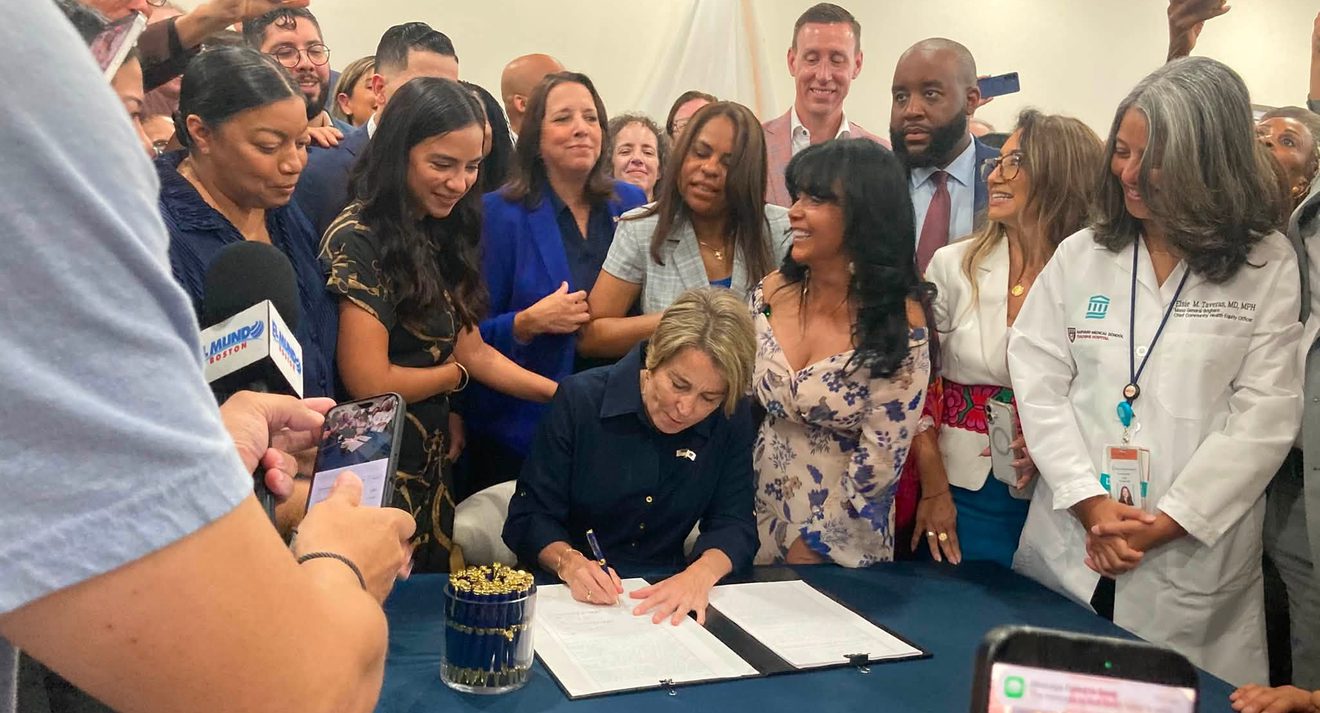
Collaborative partners also work together to advocate for policies that will enable immigrant workers to obtain drivers licenses, health care access and more. Led by the Brazilian Worker Center, SEIU 32 BJ and the Driving Families Forward coalition, we joined forces to successfully advocate for the passage of the Work and Family Mobility Act, ensuring all qualified Massachusetts residents including all immigrants could apply for a driver’s license; and mobilized support for the law when challenged by a ballot question (#YESon4), to uphold the Work and Family Mobility Act as law. Passage of this bill was a huge success.
Looking ahead
Immigration to Massachusetts has increased significantly over the past year and this influx is expected to continue, creating major challenges in ensuring immigrants have the resources they need. In 2021, Massachusetts welcomed 1,000 refugees, migrants, and asylum-seekers. Estimates suggest that in 2022, over 2,000 migrants, primarily from Haiti and South American countries arrived between May and August alone. (WBUR; October 26, 2022).
Massachusetts has also gained a reputation within the immigrant community as a welcoming place to land. For example, when immigrants were sent to Martha’s Vineyard; local and state officials, volunteers, and community and church organizations mobilized to secure emergency
shelter and services, and immigration attorneys traveled to the island to provide pro bono legal services. In addition, greater Boston-based organizations like Immigrant Family Services Institute which connects Haitian immigrants to resources, are well-regarded by newcomers, drawing them to settle in Massachusetts.
Many migrants leave their countries because of extreme food insecurity, gang violence, and government corruption and arrive in the U.S. extremely vulnerable and in need of a variety of services, lacking stable housing, jobs and internet to access information about resources. Supporting them as they work toward stability is crucial.
Meanwhile, many immigrants who are here already continue to experience the impacts of the pandemic. Since the pandemic began, costs of housing (particularly in greater Boston), gas, food and other expenses have increased tremendously, impacting residents throughout the state. In addition to this, immigrants experience structural inequity that spans housing, jobs and other basic needs. While this inequity has become more visible since COVID began, we have a long way to go to address it.
The Massachusetts Immigrant Collaborative will be critical in providing resources including food, legal services and other basic and urgent needs. Our five priorities in the coming year are:
- Continued Cash, Food & Vaccine Assistance
- Workforce Development & Workers Rights
- Increased Capacity for our Partners
- Advocacy
- Immigration Legal Services
We are grateful for your partnership and look forward to keeping you updated on our on-going work supporting the immigrant community in Massachusetts.